

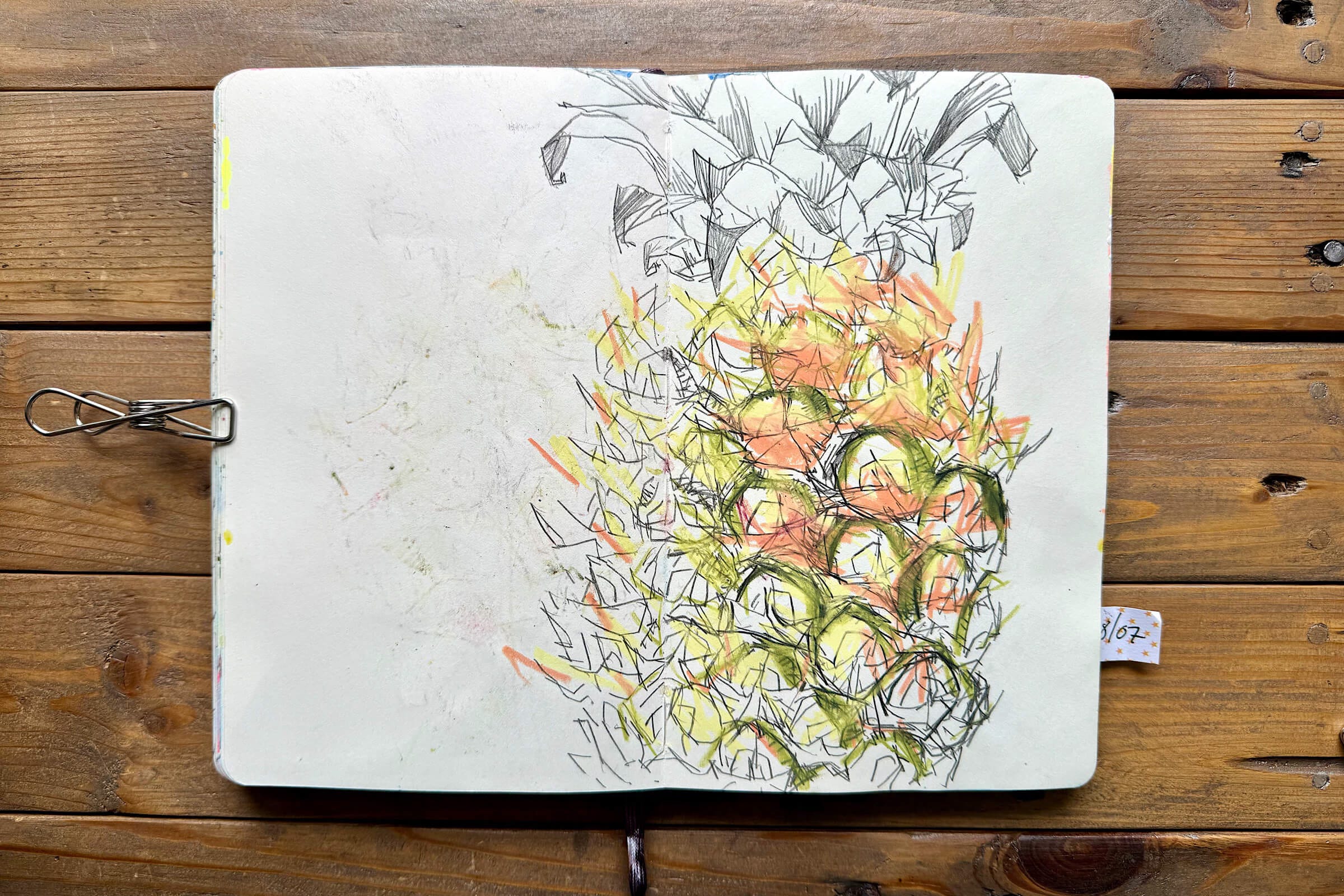
For the Love of Pineapples
Anyone who knows me well knows I LOVE pineapples. I love their flavour. I love their structure. Their majestic crown, the abundance of colours hiding in plain sight on their intricately textured surface and above all else, I love the mathematical code neatly tucked within their tightly packed buttons that twirl around the surface of a pineapple in a Fibonacci spiral.
I thought I knew what pineapples looked like until I started drawing them. I realised I'd been missing the wonders of their prickly universe. These secrets are yours for the taking. You just have to look.
For example, did you know that pineapples have a tantalising ombre colour effect on their skin? If you look closely, you'll see it's made up of more pinks, spring greens, gold, and ochre shades than simply the yellow we typically associate with them. They are one of those busy sorts of structures that used to terrify me at the thought of drawing them.
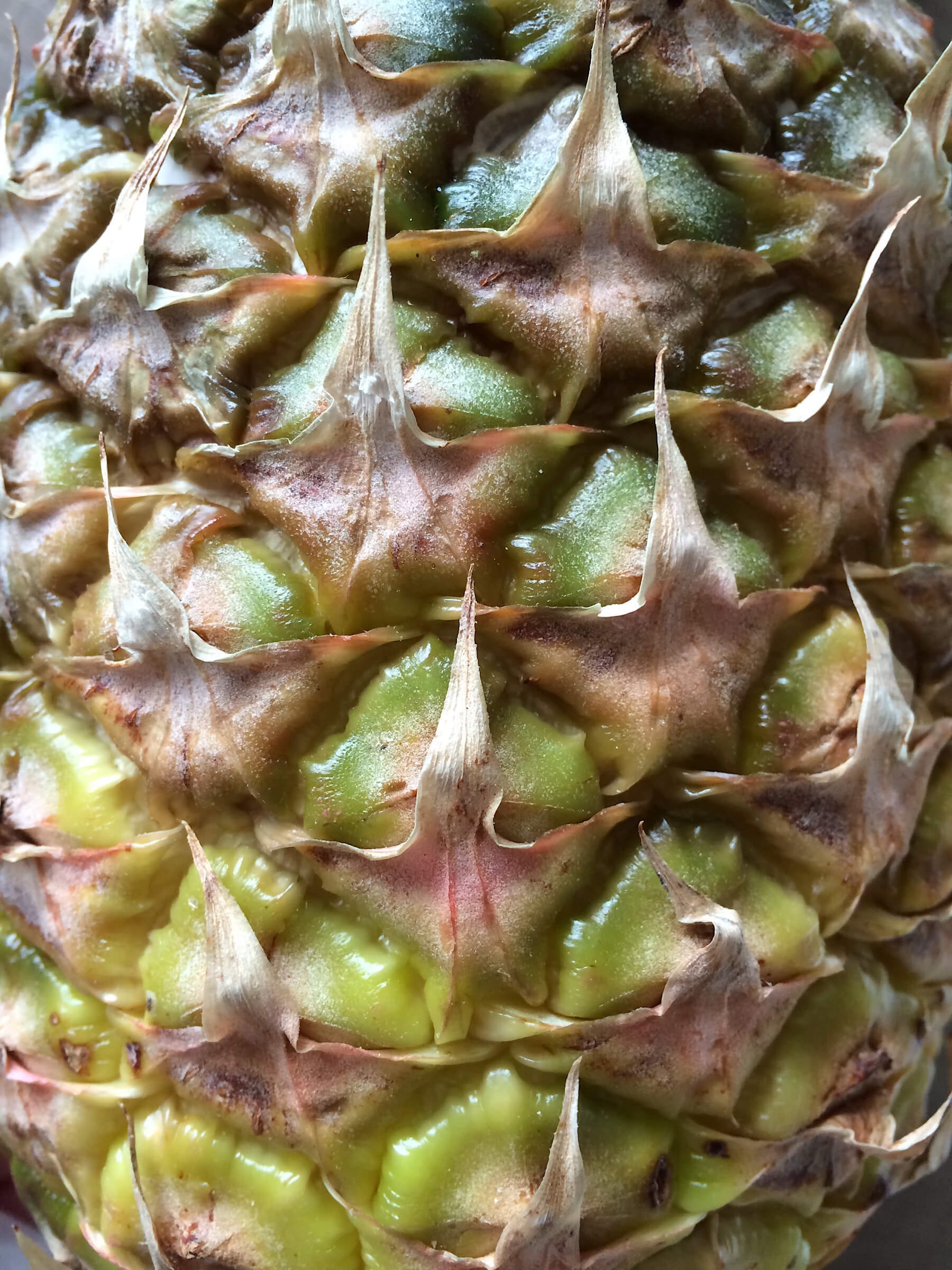
Their form always appeared random and would produce a frenzied mass of marks on my page. The logic was that if I attacked the subject with as many scribbles as possible, I'd be able to make the drawing appear as complex as the actual structure. The only thing was, I was just kidding myself. By the time I'd finished a drawing, I knew I didn't know or understand any more about the form of a pineapple than I did before I started. How could I be beaten by an object I loved so much just because it was complicated.
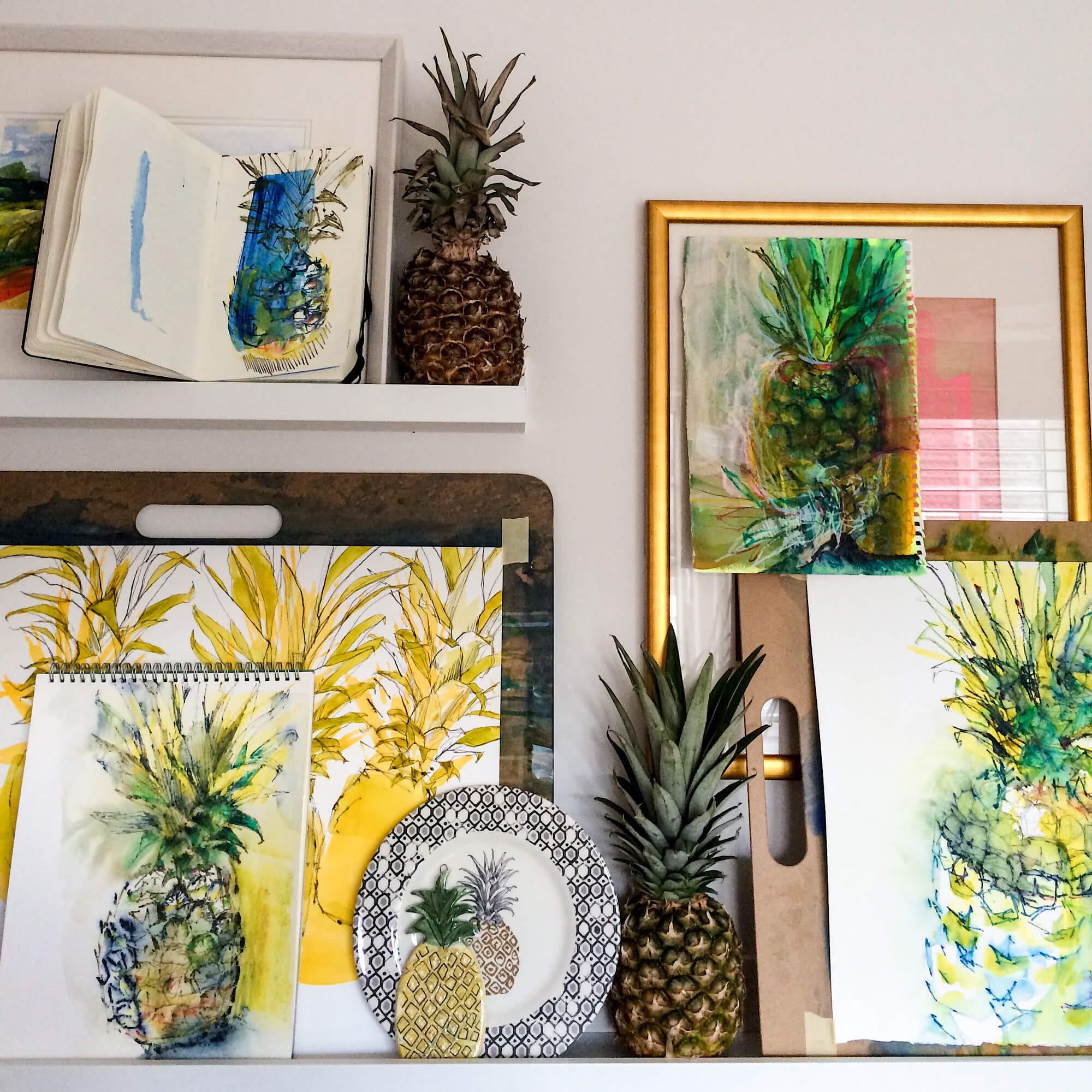
After much frustration and failed attempts, I decided to take it another way. I cleared my schedule, bought a pineapple and, armed with only a pencil and sketchbook, sat down to really look. Bit by bit and button by button, I realised each segment interlocked like small hexagonal mosaic tiles. Only the magic didn't stop there. The more I looked and committed purposeful marks to the page, the more it dawned on me that the hexagonal buttons spiralled down and around the cylindrical body of the fruit. It was like finding the code to unlock how to draw a pineapple portrait. It was such a revelation. This mysterious organic object was not quite so mysterious anymore.


I took the exercise further and began to research the anatomy of pineapples. I learned that the buttons are a complex arrangement of individual ovaries that, when cut into, have their own distinctive spiral forms. I never imagined I'd become so intimately introduced to a piece of fruit, but more than that, it is a first-hand example of why it can be so essential to work from life.
To hold the object you are studying in your hands, turn it around, explore its form, textures, smells (and, in this case, taste), or if it's bigger than a still life, walk up to it and around it. Whatever it is, really look at it. Understand how the light hits the subject and what shape hides around its corners, on the other side, top, and bottom. Only then can you fully understand a thing and make discoveries that mean something to you.
Hand on heart, I'm no longer terrified of drawing pineapples. I do, however, need to dedicate time to drawing them, and this feels like a mark of respect for such a beautifully designed natural wonder.

A Playful Mindset: Gathering Inspiration
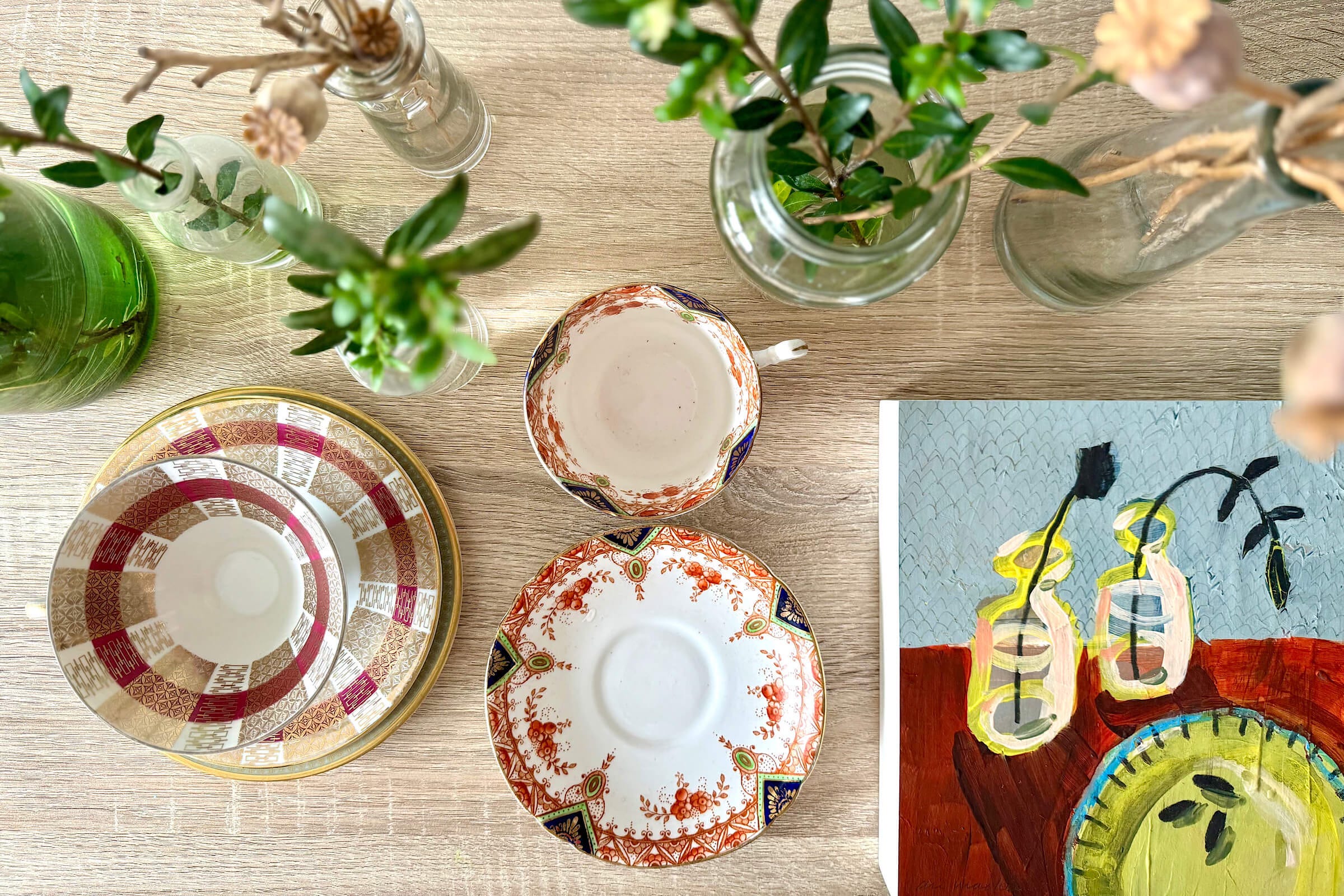
A really valuable tool in a creative practice is the art of gathering inspiration. In any other industry, this would probably be termed "research", and while looking at what others have done before can be a helpful starting point, the real opportunity for developing our unique art-making vocabulary comes when we explore subjects for ourselves. Going out into the world and finding the things that light us up.
Instagram, Pinterest, and the Internet at large are great ways of seeing how other people interpret the world around them. But if we start using reference material gathered from these places, we form opinions through the filter of other people's eyes and not our own. It can also lead to tricky copyright issues, so it's best to tread carefully.
A drawing or painting made from an image found on the Internet or from a magazine or book, etc, infringes the copyright of the person who made or photographed the original image. If you're making a copy to learn a new technique and mark your study as such, that's fine. However, it's worth thinking twice if you plan to use that study commercially.
It's quite a topical subject at the moment, considering AI, big tech, and government plans for copyright. There's a great podcast about copyright in art that's relevant, particularly if you're an artist based in the UK. Ask An Artist, Episode 25 by Peter Keegan and Tom Shepherd, interview Sal Shuel, a copyright expert, about all the do's and don't of using reference material and who retains the copyright. As I said, all this may change depending on the future of AI training, but it's an invaluable guide to start with. You'll find the link here:
Go out and about and explore the things that spark your interest. Make your own drawings and studies. Take your own photographs and learn to recognise the bits of things that spark your interest. Keep a record of them in a sketchbook or in a digital file. See the patterns that appear in the things you're drawn to. Note when something pops up more than once. By keeping a record like this, you are building a self-sustaining collection of reference material that is truly unique to you and exudes the passion that only you can bring to it.
Go forth and gather and have a blast doing it.
Sketchbook Playdate Episode 7: Glass Fruit Bowl
Have you experienced the frustration of trying to draw a subject you find complicated or just downright scary? Trust me, I understand. As I've been saying, I’ve been there myself. It's like you hit a wall and don't know where to turn. Practice and lots of it is the hard truth of overcoming any art-making hurdle.
But what if you had the key to get you there faster!
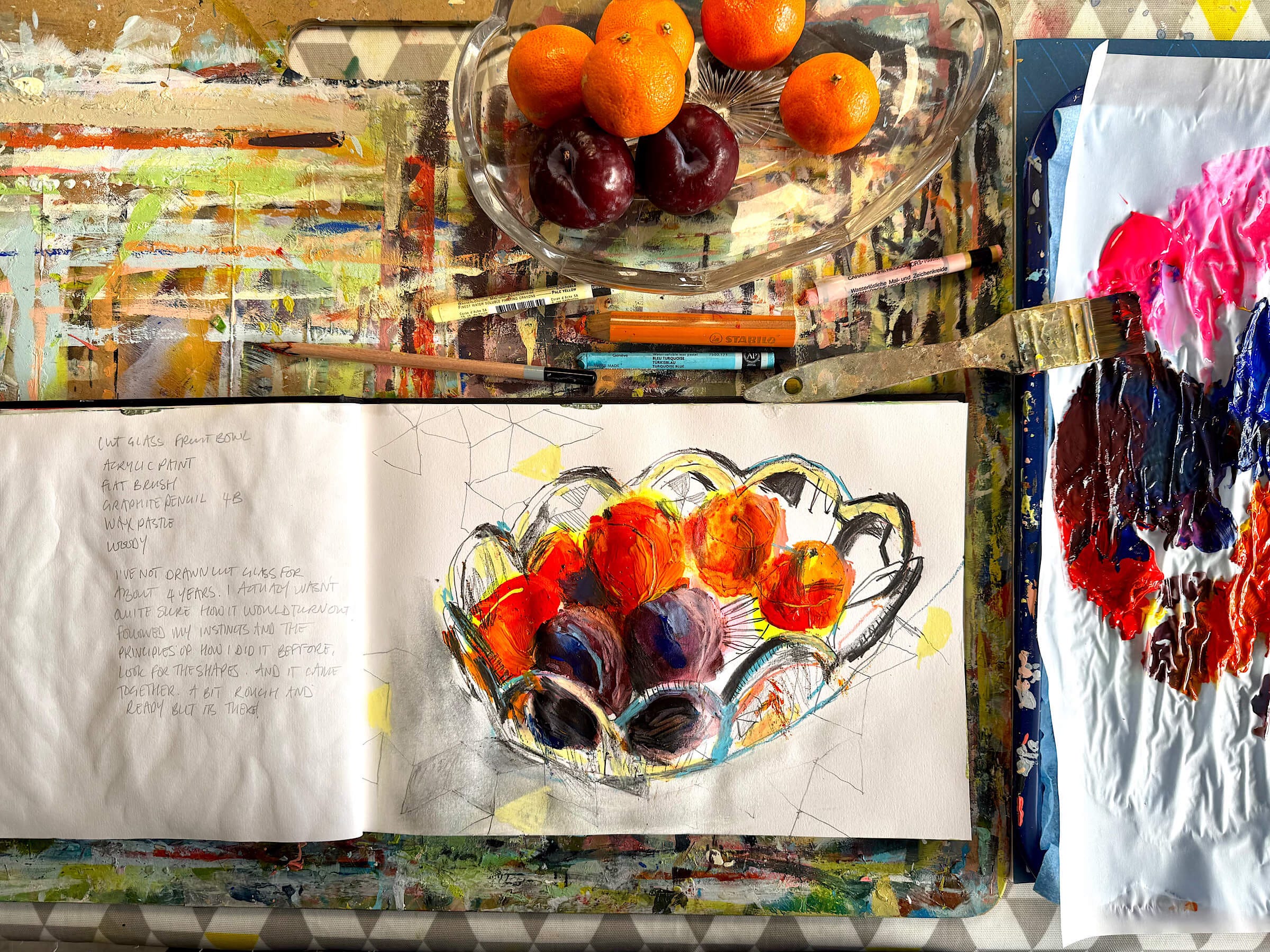
I've got just the key to unlock my secrets to drawing glass, and it's all right here in Sketchbook Playdate Episode 7. Watch as I combine quick drawing techniques with painterly marks and sumptuous colours to create a playful sketchbook page, giving the illustrative sense of glass transparency. All you need to know, including materials and handly links to source them, are conveniently laid out in Glass Fruit Bowl.
If you want the key to unlock this tricky still-life subject, join the Sketchbook Playdate BRIGHT Family and watch today.

Please like, share and leave a comment. I'd love to spread the word about this BRIGHT Substack, and I'd love to hear your thoughts on sketching.
Read on to see how my sketchbook drawing of a glass fruit bowl leads to so much more.
You are receiving this email because you either signed up for BRIGHT News or BRIGHT by Ali Mackie.

Draw to Explore
How I've used Cut Glass in my work
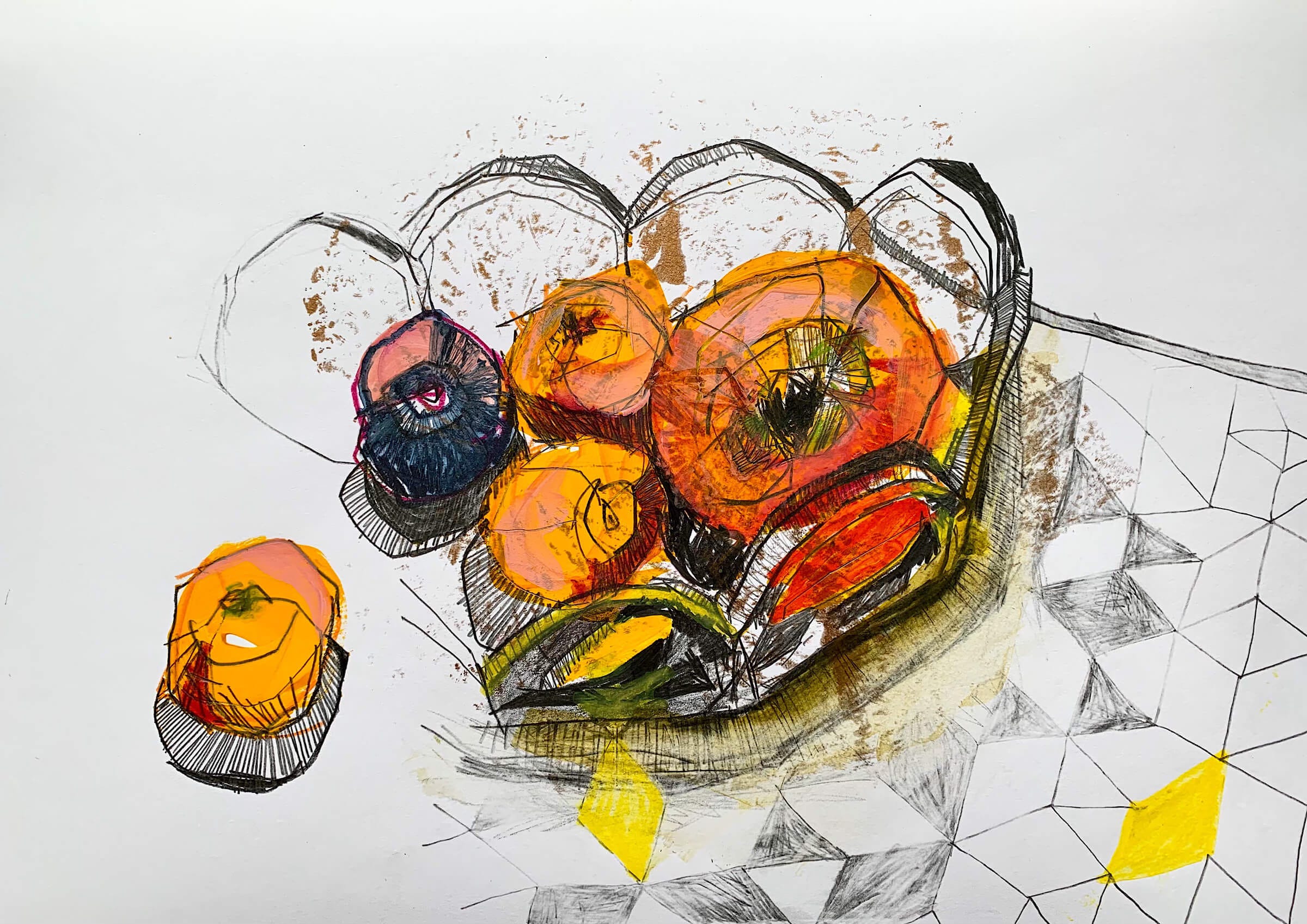
A little like the complexity of pineapples, cut glass was a tough subject to overcome. I often avoided glass objects when choosing a subject to draw or paint. Strategically placing something less scary in front of a vase or simply ignoring it altogether. I assumed the lack of any apparent tangible surface to see light or shade on would be too complicated to draw and, therefore, better lift to someone else. During one festive season, I decided to adorn the dining room table with a cut glass dish of my grandmother's, brim full with persimmons and plums, and all of a sudden I began to think otherwise.